Every August, the night sky comes alive with streaks of light as the Perseids Meteor Shower puts on a dazzling display for stargazers around the world. Known for producing bright, fast meteors and occasional fireballs, the Perseids are among the most popular and reliable meteor showers of the year.
What is the Perseids Meteor Shower, and how does it happen?
The Perseids occur when Earth passes through a trail of debris left behind by Comet Swift-Tuttle. As these tiny dust and ice particles enter our atmosphere at speeds of around 59 km/s, they burn up and create bright streaks of light in the night sky. The shower is named after the constellation Perseus, from which the meteors appear to radiate.
What is Comet Swift–Tuttle?
Comet Swift-Tuttle is a large periodic comet with a nucleus about 26 kilometers across, roughly twice the size of the object that caused the extinction of the dinosaurs. It orbits the Sun once every 133 years and last passed close to Earth in 1992. It will return in 2126, giving future generations an even more spectacular display.
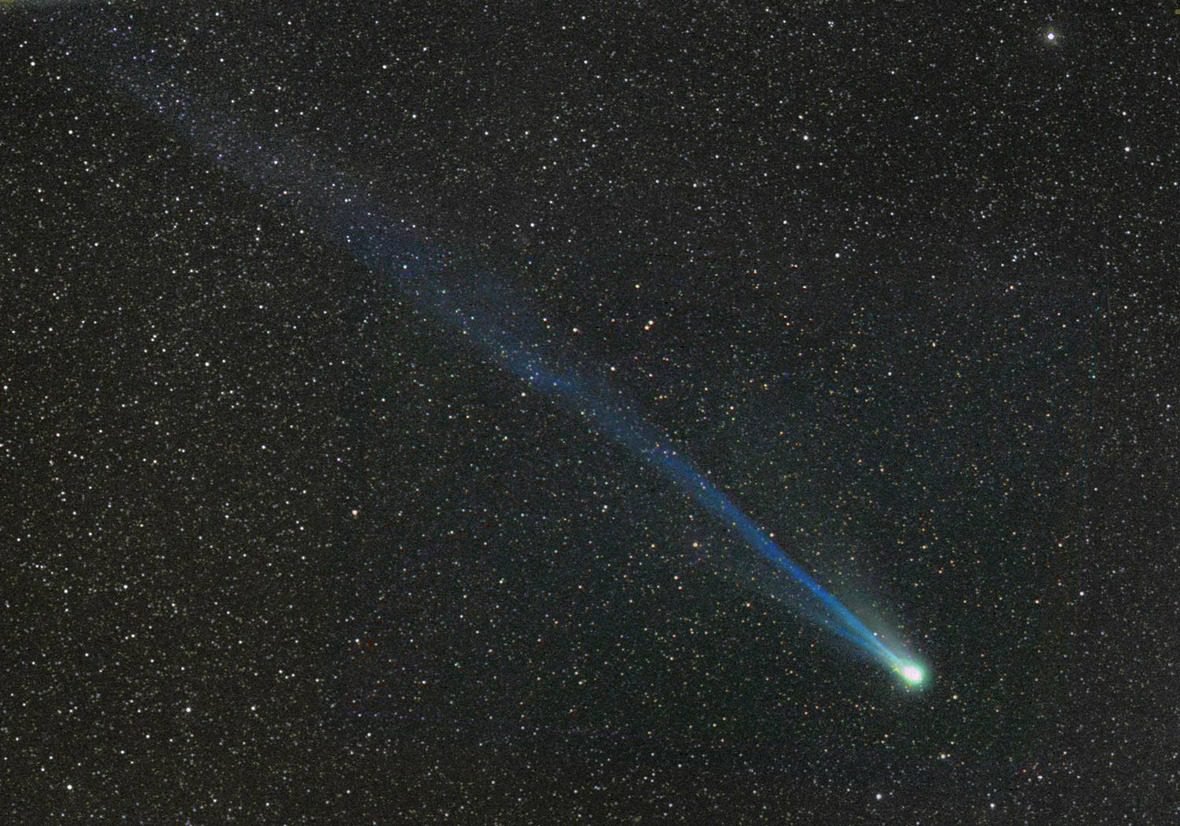
Will Comet Swift-Tuttle hit the Earth?
Despite its massive size and intersecting orbital path, astronomers have calculated that Comet Swift-Tuttle poses no threat to Earth for at least the next few thousand years. The comet’s trajectory is well understood, and while it comes relatively close to our planet, it remains at a safe distance. https://www.youtube.com/watch?v=rBLCKi5f_q8
When and where can you see the Perseids?
The Perseids occur annually between mid-July and late August, peaking around August 12-13. In 2026, the peak coincides with a new moon on August 12, creating excellent dark-sky conditions with minimal moonlight interference and allowing observers to see even fainter meteors. The best viewing times are after midnight until dawn, from any dark location away from city lights, where the shower’s bright meteors and occasional fireballs can be enjoyed.
What do you need to see it?
The best part about the Perseids is that you don’t need telescopes or binoculars, just your eyes, patience, and a dark sky. Allow 20-30 minutes for your eyes to adapt to the darkness, lie back, and watch the show.
Do the Perseid meteors hit or fall on Earth?
The Perseid meteors are fragments of cometary debris, tiny particles of dust and ice from Comet Swift-Tuttle, no bigger than a grain of sand. They are fragile and usually burn up completely high in the atmosphere, creating bright streaks of light. Only in rare cases do larger pieces survive the journey to become meteorites.
The legend behind the Perseids: fiery tears of St. Lawrence
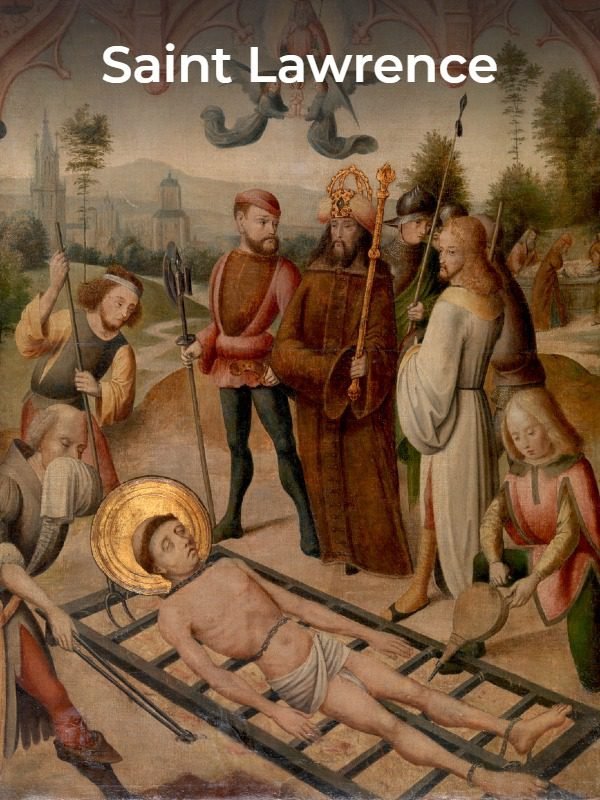
The Perseids’ annual peak closely coincides with the feast day of Saint Lawrence, a Christian martyr who was executed on August 10 in the year 258 AD during the Roman persecution of Christians. According to historical accounts, Lawrence was roasted alive on a gridiron, a method so brutal that he is often depicted in religious art holding a gridiron or surrounded by flames.
Legend says that during his execution, Lawrence displayed extraordinary courage and even humor, reportedly telling his executioners, “Turn me over, I am done on this side.” In the centuries that followed, people across Europe noticed that the meteor shower appeared around the same time each year, and the fiery streaks in the sky became known as “the tears of St. Lawrence,” a poetic reminder of his faith and suffering.
Today, while astronomers explain the Perseids as the result of Comet Swift-Tuttle’s debris burning up in Earth’s atmosphere, the romantic and cultural significance of this legend continues to add a timeless human connection to this cosmic event.
How to photograph the Perseids?
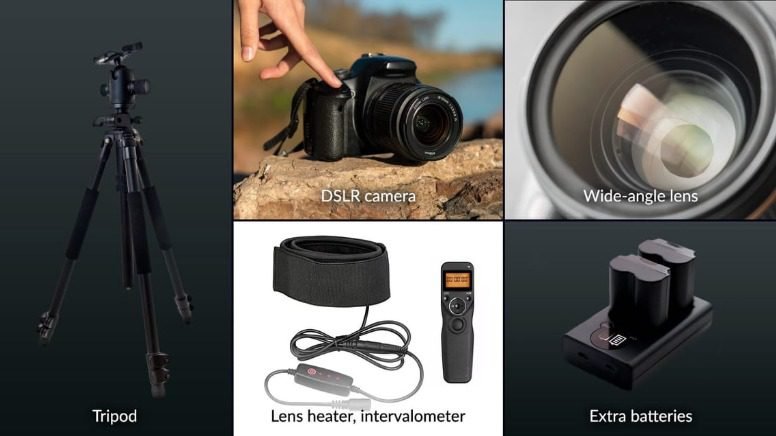
Capturing the Perseids requires a bit of preparation and the right gear. Use a DSLR or mirrorless camera for full manual control over settings such as ISO, aperture, and shutter speed. A sturdy tripod is essential for sharp, stable shots, and a wide-angle lens will help you cover more of the sky, increasing your chances of catching a meteor.
To avoid camera shake, use a remote shutter release or intervalometer, and bring spare batteries since long exposures drain power quickly. In humid or cold conditions, a lens heater can prevent condensation from forming. Turn off autofocus and manually focus on a bright star, planet, or infinity for the sharpest results.
Aim your camera toward the shower’s radiant in the constellation Perseus for more meteor captures. Set your aperture to f/2.8 or lower, use a 15–30 second exposure, and adjust ISO to 1600 or higher without introducing too much noise. Experiment with settings to capture both meteors and the beauty of the surrounding night sky.
Experience the Perseids with Dubai Astronomy Group
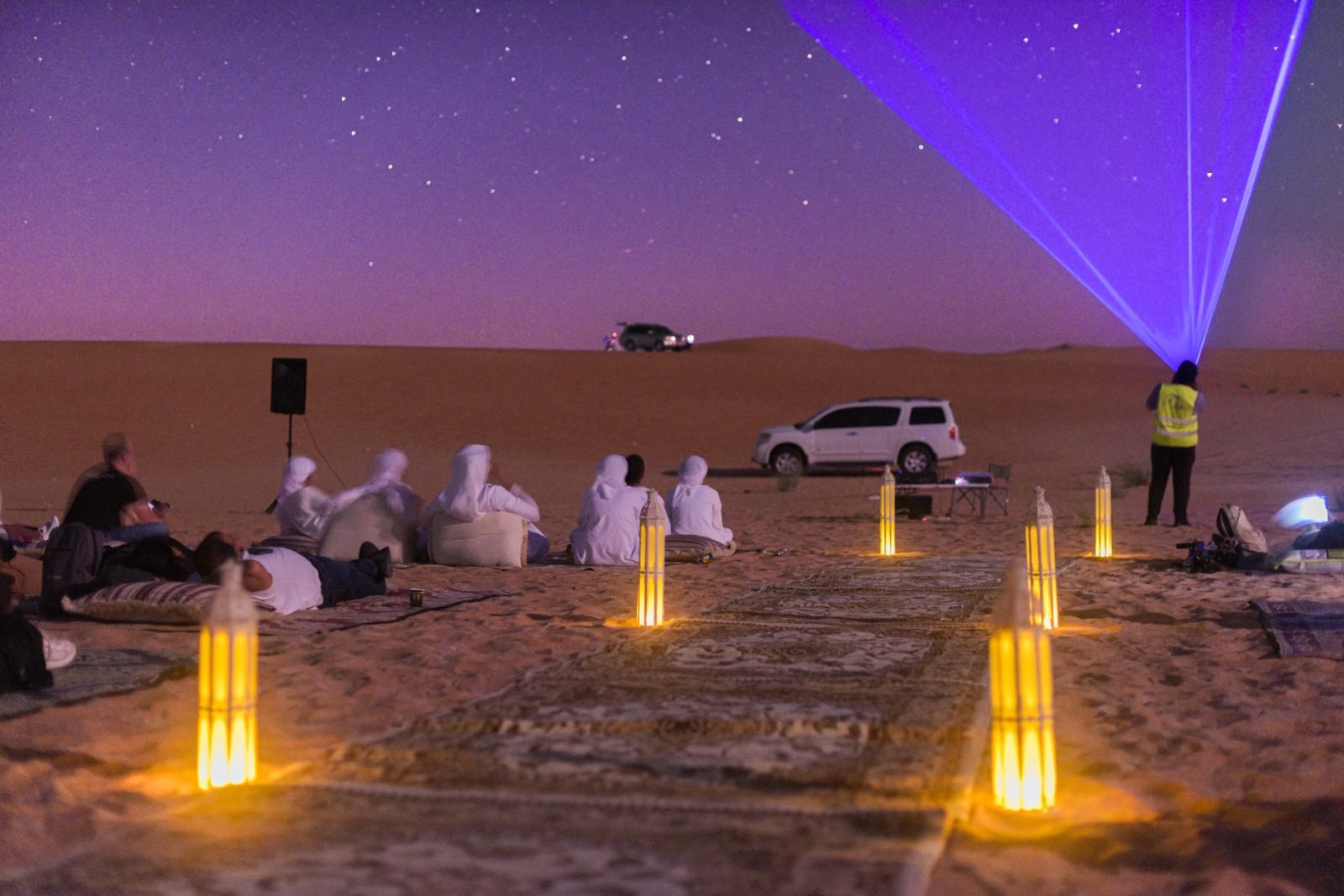
To make the most of this celestial event, Dubai Astronomy Group will host a special Perseids Meteor Shower Observation Event on Wednesday, August 12.
- Date: 12 August 2026 (Wednesday night)
- Time: 11:00 PM – 3:00 AM
- Location: Al Khatim Desert - Abu Dhabi
- Tickets: AED 150–180
- Registration Link: https://dubaiastronomy.com/event/perseids-meteor-shower-2026/
Event Schedule:
- 11:00 PM – Event Opening & Introduction
- 11:15 PM – Talk: The Perseids Meteor Shower & 2026 Sky Highlights
- 12:00 AM – Planetary Telescope Observation
- 12:45 AM – Sky Mapping Session: Stories in the Sky
- 01:15 AM – Q&A Session with Astronomy Experts
- 01:30 AM – Peak of The Perseids Meteor Shower Starts
- 02:00 AM – Telescope Observation & Meteor Watching Until 3:00 AM
Guests will enjoy guided stargazing, constellation storytelling, and telescope observations of the night sky, including the planetary lineup featuring Saturn and Mars, as well as an attempt to observe Comet 10P/Tempel 2, a challenging and faint visitor from the outer Solar System. Expert commentary will bring the science, stories, and wonders of the Perseids Meteor Shower to life, all under the UAE’s pristine dark skies and exceptional viewing conditions.
Whether you are an astronomy enthusiast, a photographer, or simply looking for a memorable night beneath the stars, the Perseids Meteor Shower 2026 promises an unforgettable journey through the cosmos.

Anything you'd like to add?
All fields optional