Astronomy enthusiasts across the UAE are preparing for one of the most exciting nights of 2026 as several remarkable celestial events come together on the same night. The annual Perseids Meteor Shower, a moonless New Moon sky, a visible planetary lineup, and the appearance of Comet 10P/Tempel 2 will create a unique opportunity for skywatchers to experience multiple wonders of the universe in a single evening.
What is the Perseids Meteor Shower?
The Perseids Meteor Shower is one of the most famous and spectacular meteor showers of the year, known for producing bright and fast-moving meteors that streak across the night sky. The meteor shower occurs every year when Earth passes through the trail of dust and debris left behind by Comet Swift-Tuttle.
As these tiny particles enter Earth's atmosphere at extremely high speeds, they burn up and create the bright flashes of light commonly known as "shooting stars."
The Perseids are famous for their high activity rate, with ideal dark-sky conditions allowing observers to see up to 100 meteors per hour during the peak.
When will the Perseids peak in 2026?
The Perseids will reach their peak during the night of 12-13 August 2026, making the early hours after midnight the best time for observation. The meteor shower will be especially impressive this year because it will occur near a New Moon, meaning the sky will be naturally darker without bright moonlight interfering with faint meteors.
How can people observe the Perseids?
Meteor showers are best viewed away from city lights, with a wide open view of the sky. Unlike many astronomical objects, meteors do not require telescopes, making the Perseids an accessible experience for everyone. However, telescopes and expert guidance can enhance the experience by revealing other celestial objects visible on the same night.
“Every year, the Perseids remind us that astronomy is not only about distant planets and galaxies, but also about experiencing the universe directly above us. This year is particularly special because several celestial events will come together, creating a night that astronomy enthusiasts will remember for years,” said Hasan Ahmad Al Hariri, CEO of Dubai Astronomy Group.
The Comet Behind the Perseids: Comet Swift–Tuttle
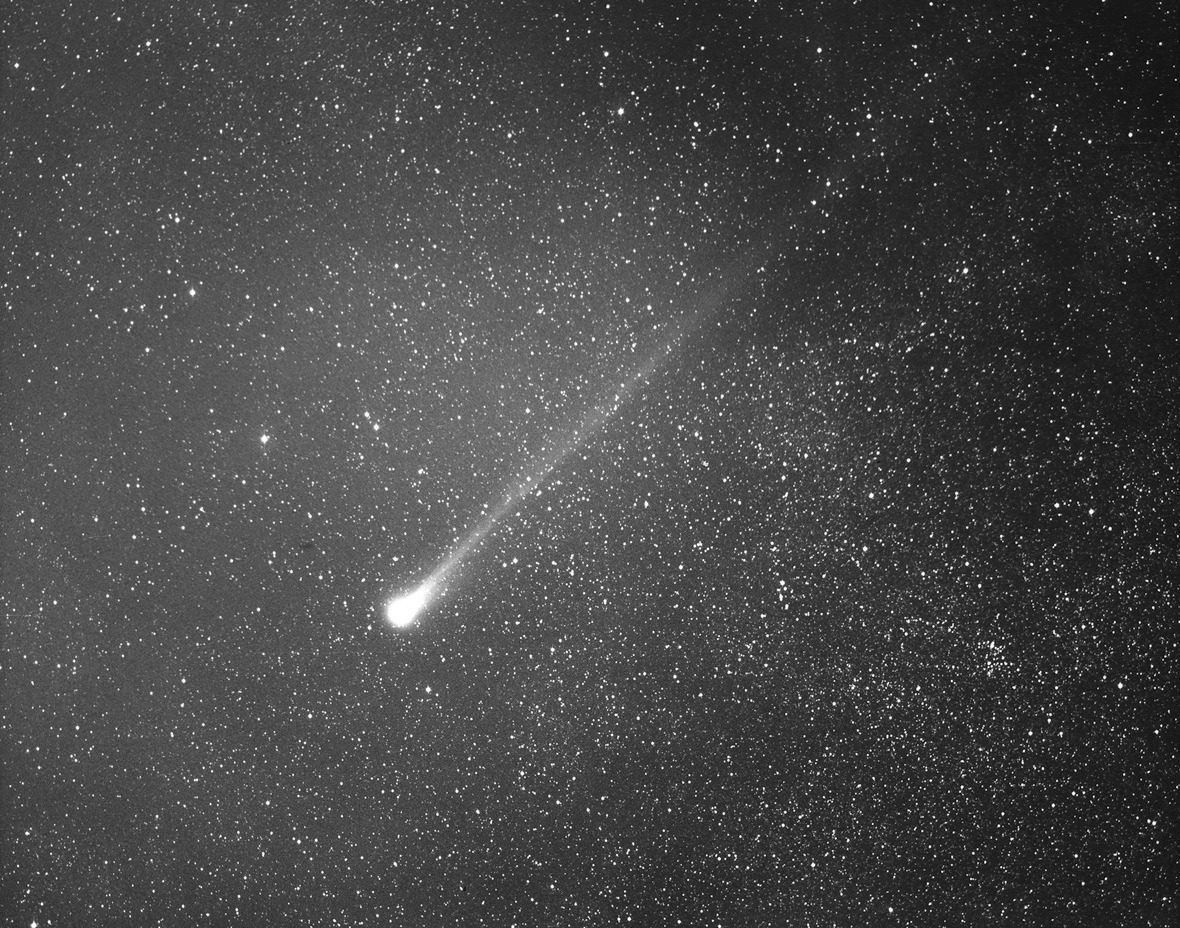
Comet 109P/Swift-Tuttle on November 27, 1992. This was the approximate telescopic appearance around that time. Courtesy Chris Schur in Arizona.
Behind every Perseids meteor is a journey that began with a single celestial visitor: Comet Swift-Tuttle.
Discovered independently by American astronomers Lewis Swift and Horace Parnell Tuttle in 1862, Swift-Tuttle is a massive periodic comet measuring approximately 26 kilometres in diameter, making it one of the largest known objects that regularly pass through the inner Solar System.
The comet completes one orbit around the Sun approximately every 133 years. Its last return to the inner Solar System was in 1992, and it is expected to make its next return in 2126. Although Swift-Tuttle itself will not be visible during the 2026 Perseids event, the meteors observed during the shower are created from the dust and debris it has released along its orbit over thousands of years.
A Planetary Lineup Across the Night Sky
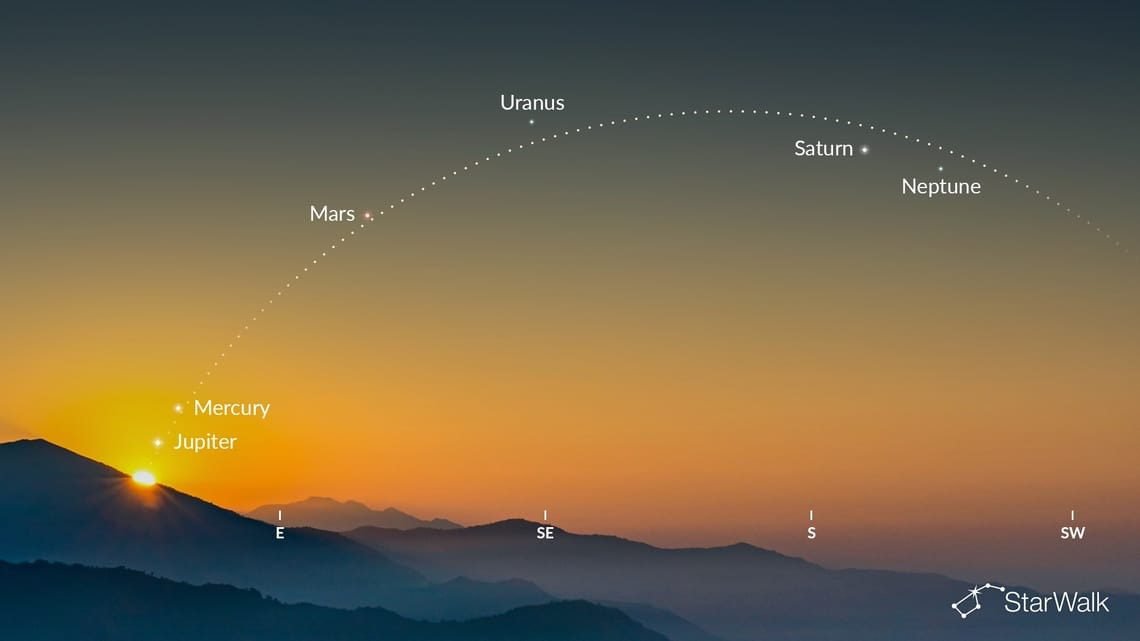
Six planets in a planetary alignment on August 12, 2026, as seen from the Northern Hemisphere. Image from the StarWalk app.
Adding to the excitement, observers will also have the opportunity to view several planets during the same night, creating a remarkable planetary display.
Saturn will be visible throughout the main observation period, shining prominently in the night sky. Later towards the early morning hours, Mars will rise and become visible before dawn.
Observers will also have the chance to explore the distant ice giant planets Uranus and Neptune. However, due to their immense distance from Earth, both planets appear very faint and can be quite challenging to observe, even through telescopes.
While Mercury and Jupiter will rise very close to sunrise and Venus will appear after sunrise, the timing will not allow them to be practical targets during the main observation window.
This combination of planets visible during one night provides a unique opportunity for visitors to explore different worlds within our Solar System while watching meteors streak overhead.
A Visitor From the Outer Solar System: Comet 10P/Tempel 2
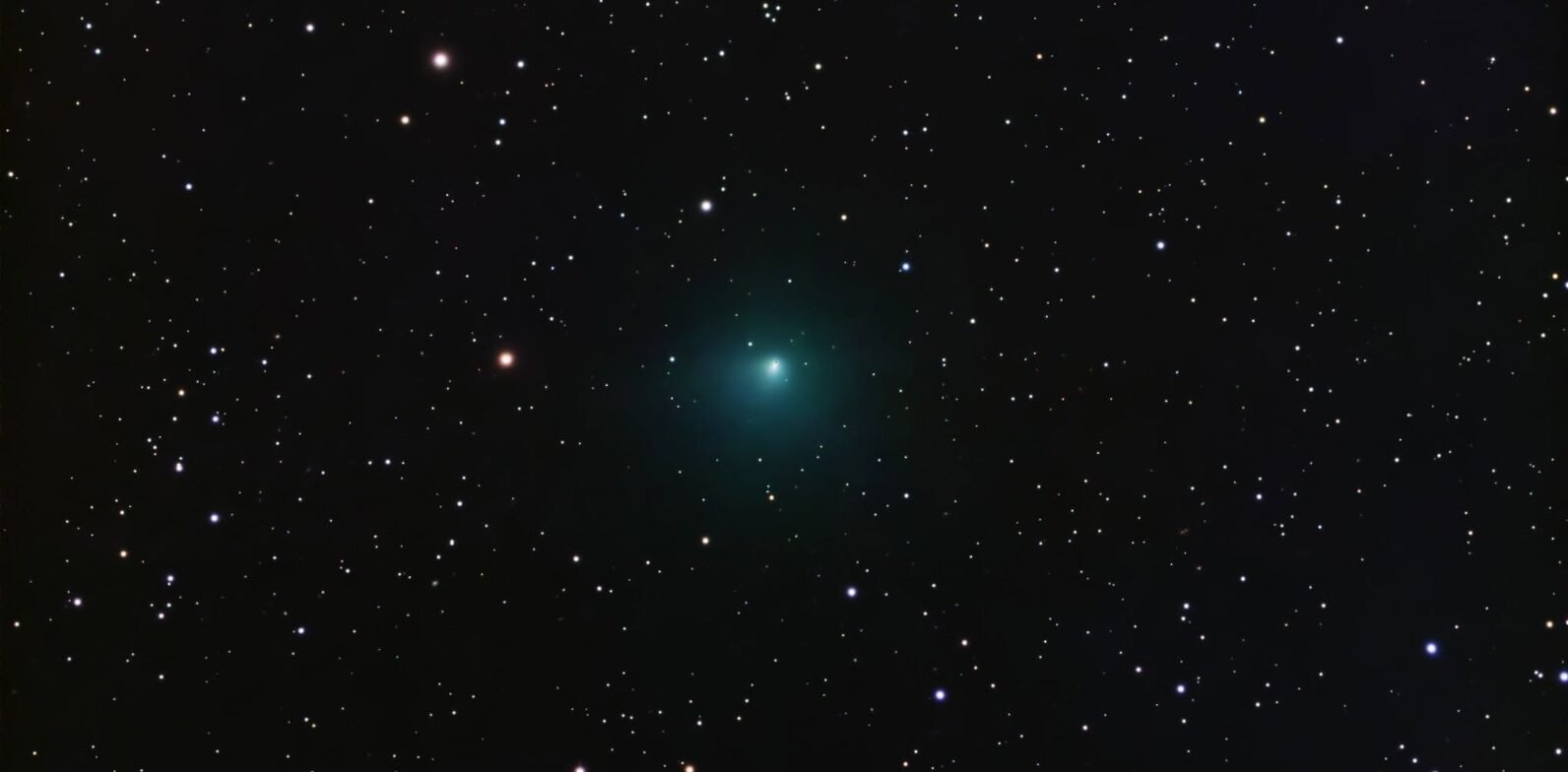
Comet 10P/Tempel 2 photographed by Jeff Fishman (AstroFish Photography) on 27 July 2026. Image courtesy of the photographer.
Another highlight of this year's astronomical event is the appearance of Comet 10P/Tempel 2, a periodic comet that returns to the inner Solar System approximately every 5.4 years.
Comets are frozen remnants from the early formation of the Solar System. As they approach the inner Solar System, heat from the Sun causes their icy materials to release gas and dust, creating the glowing appearance that makes them one of astronomy's most fascinating objects.
10P/Tempel 2 was discovered on 4 July 1873 by German astronomer Ernst Wilhelm Tempel, a prolific comet discoverer. Its official designation tells its story: the “P” indicates that it is a periodic comet with an orbital period of less than 200 years, while the number 10 means it was the tenth periodic comet to receive an official confirmed designation.
The comet is expected to reach its brightest around late July and early August 2026, with its closest approach to the Sun (perihelion) occurring on 2 August 2026. Although it is not expected to be visible to the naked eye, it may be observed using binoculars or telescopes from dark-sky locations, appearing as a faint, fuzzy object among the stars. During the Perseids Meteor Shower period in August, Comet 10P/Tempel 2 will provide an additional observing target for astronomy enthusiasts, offering a chance to witness another visitor from the outer Solar System alongside the meteor shower.
Dubai Astronomy Group’s Biggest Perseids Observation Event of 2026
To celebrate this extraordinary night, Dubai Astronomy Group will host its largest Perseids Meteor Shower observation event of 2026, bringing together astronomy enthusiasts, families, and photographers for an unforgettable journey through the night sky.
Visitors will enjoy an immersive astronomy experience featuring guided night sky tours, meteor shower observations, telescope views of Saturn, Mars, deep-sky objects including galaxies and nebulae, and an attempt to observe Comet 10P/Tempel 2. As comets are faint and their visibility depends on factors such as the comet’s activity, atmospheric conditions, humidity, and sky clarity on the night of the event. The programme will also include constellation storytelling, expert explanations from the Dubai Astronomy Group team, and astrophotography opportunities to capture the beauty of the night sky.
Event Details:
- Date: 12-13 August 2026
- Time: 11:00 PM – 3:00 AM
- Location: Al Khatim Desert - Abu Dhabi
- Tickets: AED 150 – AED 180
- Registration Link: https://dubaiastronomy.com/event/perseids-meteor-shower-2026/
Dubai Astronomy Group invites you to join this once-in-a-year astronomical celebration and witness a rare night where meteors, planets, and a comet come together for an unforgettable stargazing experience.
Become Part of the Astronomy Community
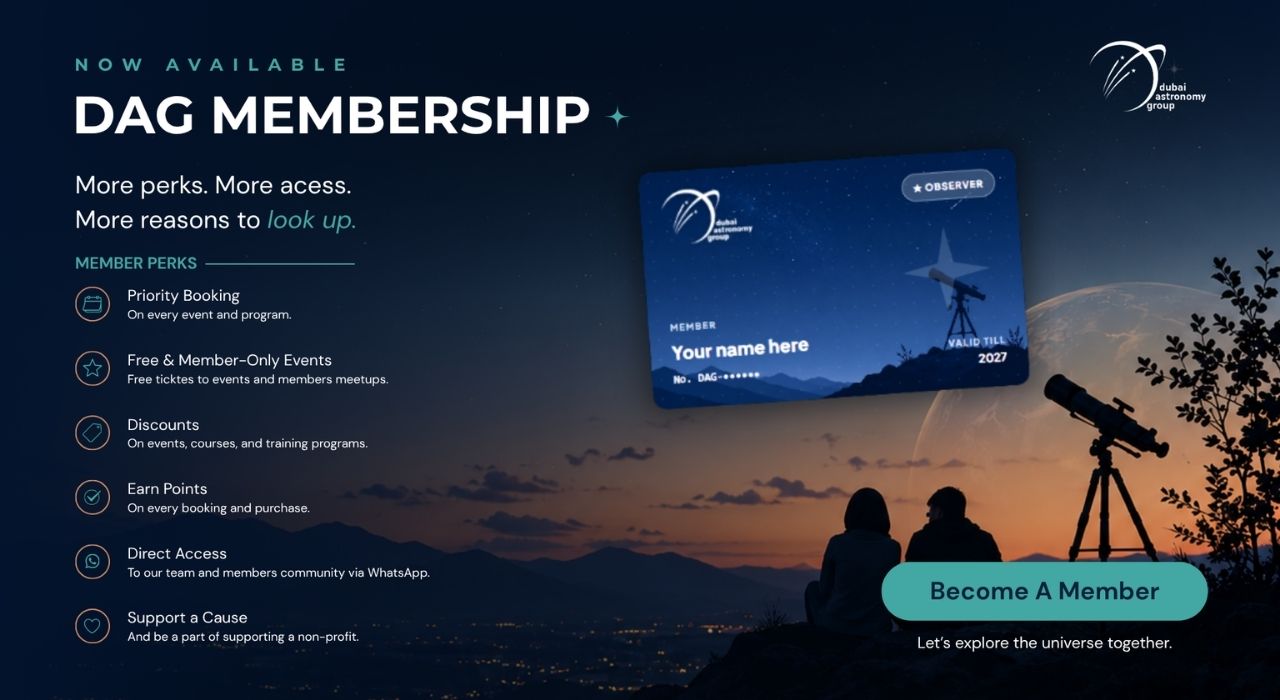
For those who want to make astronomy a bigger part of their lives, Dubai Astronomy Group has launched its brand-new membership program, creating a pathway for enthusiasts of all ages and experience levels to become part of the UAE’s growing astronomy community. Members can choose from different tiers designed to match their level of involvement, including Explorer, Enthusiast, and Pioneer memberships, each offering unique benefits and opportunities to connect with the cosmos.
The new membership program also introduces a points system, allowing members to earn points through participation in DAG activities, events, and community engagement. These points can unlock additional benefits and rewards, encouraging members to stay active, continue learning, and make astronomy a regular part of their journey.
From exclusive members-only experiences and priority access to events to discounts on selected programs and activities, DAG membership provides a way for individuals and families to explore the universe while being part of a passionate community of stargazers and space enthusiasts.
Become a member: https://dubaiastronomy.com/become-a-member/
Anything you'd like to add?
All fields optional