This May 31, residents across Dubai are being invited to look up and look twice.
A rare seasonal Blue Moon will rise above the UAE skies alongside a Micromoon, creating one of the year’s most unusual lunar events. To celebrate the occasion, Dubai Astronomy Group, in collaboration with SEE Institute, will host a special public observation night at SEE Institute in The Sustainable City from 8:00 PM to 10:00 PM.
The evening will feature telescope observations, astronomy talks, astrophotography opportunities, and a giant inflatable Blue Moon installation welcoming visitors beneath the night sky.
So What Exactly Is A Blue Moon?
A Blue Moon is not defined by color, but by timing.
There are two accepted definitions of a Blue Moon. The traditional definition refers to the third full moon in an astronomical season that contains four full moons instead of the usual three. The second, and more widely known definition refers to the second full moon occurring within a single calendar month.
The upcoming full moon on May 31, 2026, falls under this monthly definition, making it the second full moon of May. Because the lunar cycle lasts approximately 29.5 days, the calendar occasionally allows two full moons to occur within a single month, a phenomenon that happens roughly once every two to three years.
This is also where the phrase “once in a blue moon” comes from, symbolizing something uncommon or rare.
The last Blue Moon was on August 19, 2024. And the next seasonal Blue Moon takes place on May 20, 2027.
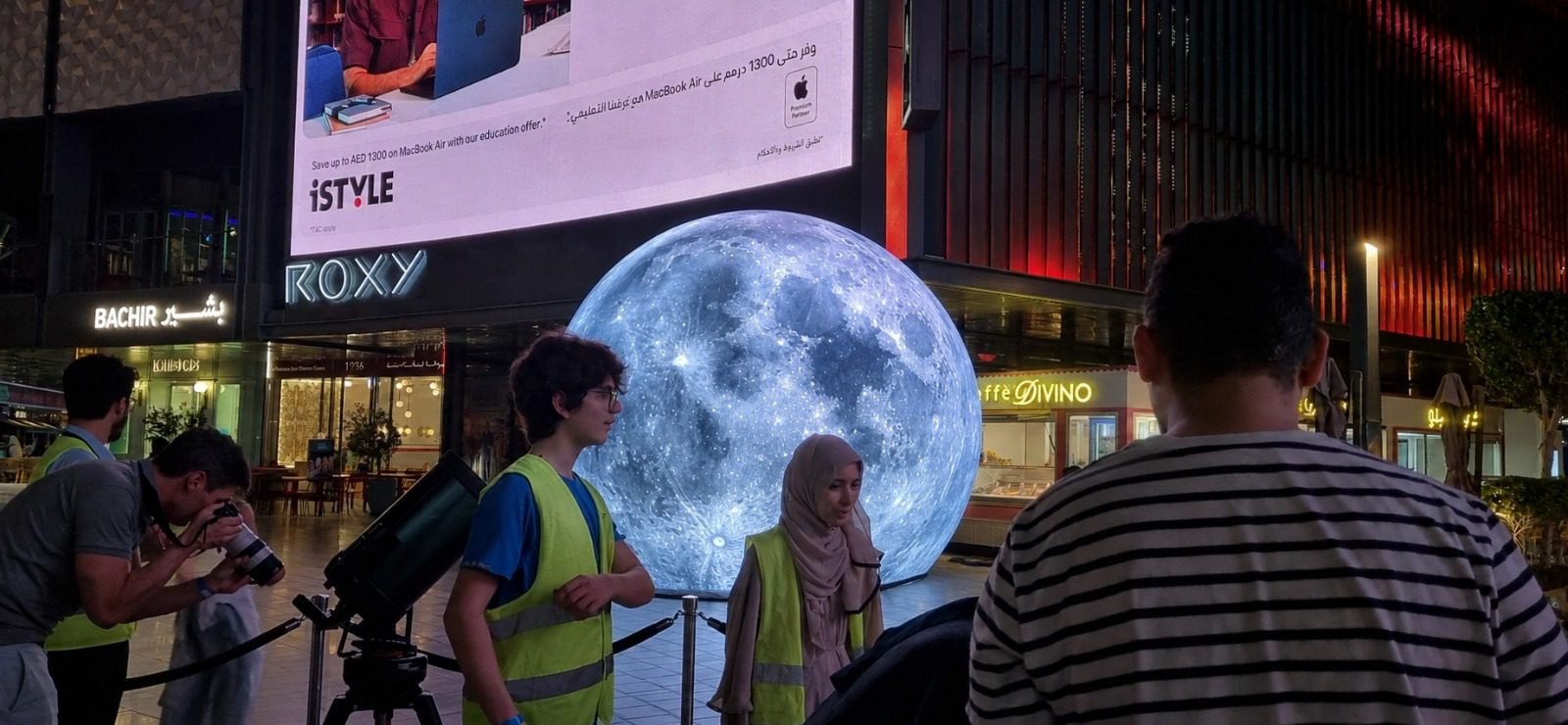
Super Blue Moon event in collaboration with Roxy Cinemas at City Walk on August 19, 2024, alongside the special screening and premiere of Fly Me to the Moon. Image has an AI-generated visual of the Moon. The actual Moon installation was displayed indoors.
Will the Moon Actually Look Blue?
Not really.
Despite the name, Blue Moons typically appear like any other full moon. In extremely rare situations involving volcanic ash, wildfire smoke, or unusual atmospheric particles, the Moon can appear bluish in color but those cases are uncommon.
For this event, however, visitors may spot something blue before the Moon even rises: a large illuminated inflatable Blue Moon installation placed at the venue, designed to create an immersive astronomy experience for guests.
Why Is This Full Moon Also Called a Micromoon?
Adding another layer of rarity to the event is the occurrence of a Micromoon.
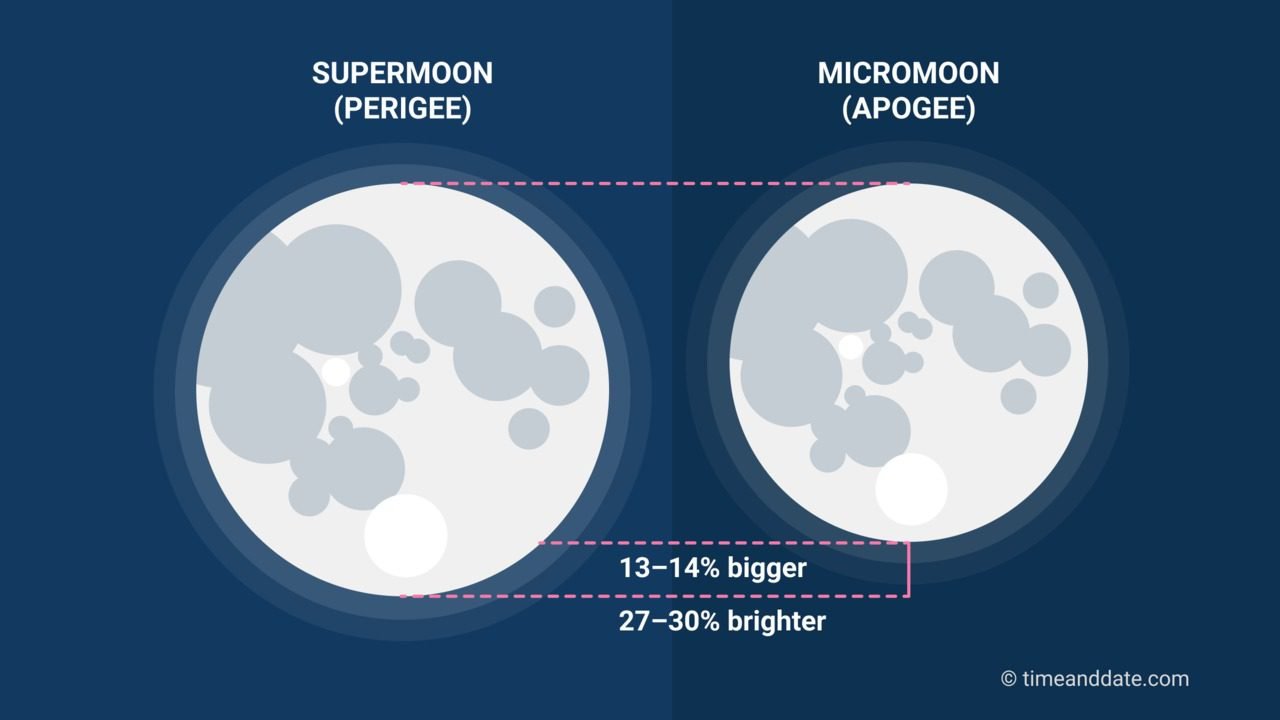
Unlike a Supermoon, which occurs when the Moon is closest to Earth in its orbit, a Micromoon happens when the full moon takes place near the Moon’s farthest point from Earth, known as apogee. As a result, the Moon appears slightly smaller and dimmer than usual.
The difference may be subtle to casual observers, but astronomers say it offers a fascinating reminder that the Moon’s distance from Earth is constantly changing.
Does a Micromoon Affect the Tides?
Yes, but only slightly.
Tides on Earth are influenced primarily by the gravitational pull of the Moon. When the Moon is farther away during a Micromoon, its gravitational effect is marginally weaker, resulting in slightly less extreme tides, sometimes referred to as apogee tides.
However, the difference is subtle and not noticeable in everyday coastal conditions. Ocean weather, wind, and Earth’s own rotational dynamics have a far greater impact on real-world sea levels than the small variation caused by the Moon’s distance.
Can the Moon Trigger Natural Disasters?
This is a common question and a common misconception.
While the Moon does influence tides, there is no scientific evidence that lunar phases such as the Blue Moon or Micromoon trigger natural disasters like earthquakes, volcanic eruptions, or extreme weather events.
Earthquakes, for example, are driven by tectonic plate movement deep within Earth’s crust, not lunar alignment. Although the Moon’s gravity can cause very minor stress changes in Earth’s crust, these effects are not strong enough to initiate seismic activity.
Why Do People Find Moons So Fascinating?
For centuries, full moons have inspired myths, calendars, navigation systems, poetry, and scientific discovery across civilizations.
Today, they continue to capture attention through astrophotography, public stargazing events, and social media, helping reconnect people with the night sky in increasingly urban environments.
Dubai Astronomy Group has spent over two decades promoting astronomy awareness across the UAE through educational programs, observations, and public outreach initiatives designed to make space science accessible to all ages.
What Can Visitors Expect During the Event?
Guests will enjoy guided moon observation through telescopes, a special lecture exploring the science behind the Blue Moon and NASA’s Artemis mission, hands-on smartphone moon photography sessions, and access to the ImmerSEE Experience, all in one unforgettable night beneath the skies of The Sustainable City.
The event is designed to combine science, technology, education, and immersive experiences in a way that makes astronomy engaging for all ages.
Event Details:
Date: May 31, 2026
Time: 8:00 PM – 10:00 PM
Location: SEE Institute, The Sustainable City – Dubai
Registration Link: https://dubaiastronomy.com/event/blue-moon-2026/
Whether you come for the science, the photography, or simply the experience of standing beneath a rare full moon, this event offers a reminder to pause, look up, and reconnect with the night sky.
Anything you'd like to add?
All fields optional